
Every year on 8 September, World Physiotherapy Day provides an opportunity to recognise the important role physiotherapists play in helping people move, recover and live healthier lives.
In 2026, the focus is particularly important. World Physiotherapy Day 2026 is highlighting the role of physiotherapy and physical activity in the prevention, management and rehabilitation of cardiovascular disease and stroke.
For many people, physiotherapy is something they associate with back pain, sports injuries, sore knees or recovering after surgery. But physiotherapy can play a much broader role in helping people stay physically active, manage long-term health conditions and maintain their independence.
What is World Physiotherapy Day?
World Physiotherapy Day is celebrated every year on 8 September, marking the date World Physiotherapy was founded in 1951. The day was officially designated as World PT Day in 1996.
It is an opportunity to recognise the contribution physiotherapists make to individuals, families and communities around the world, while raising awareness of how physiotherapy can support better health and quality of life.
For the next four years, World Physiotherapy is focusing its World PT Day campaigns on noncommunicable diseases. The 2026 campaign begins this focus with cardiovascular disease and stroke.
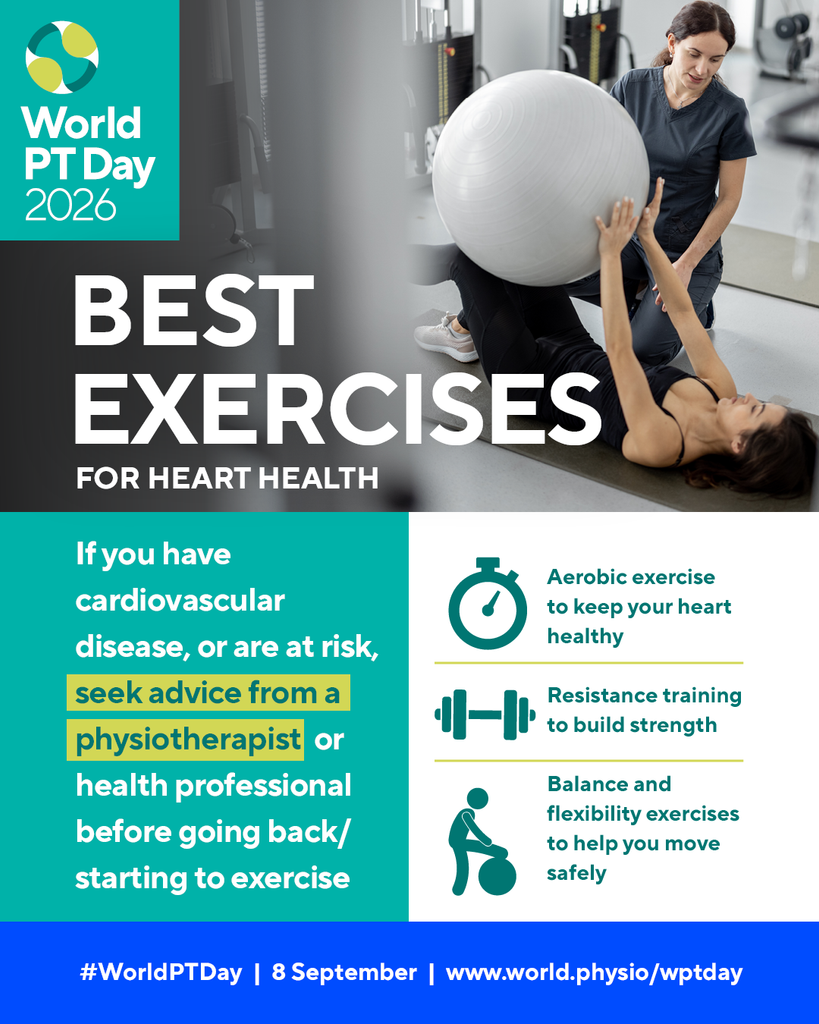
Why is cardiovascular health a physiotherapy issue?
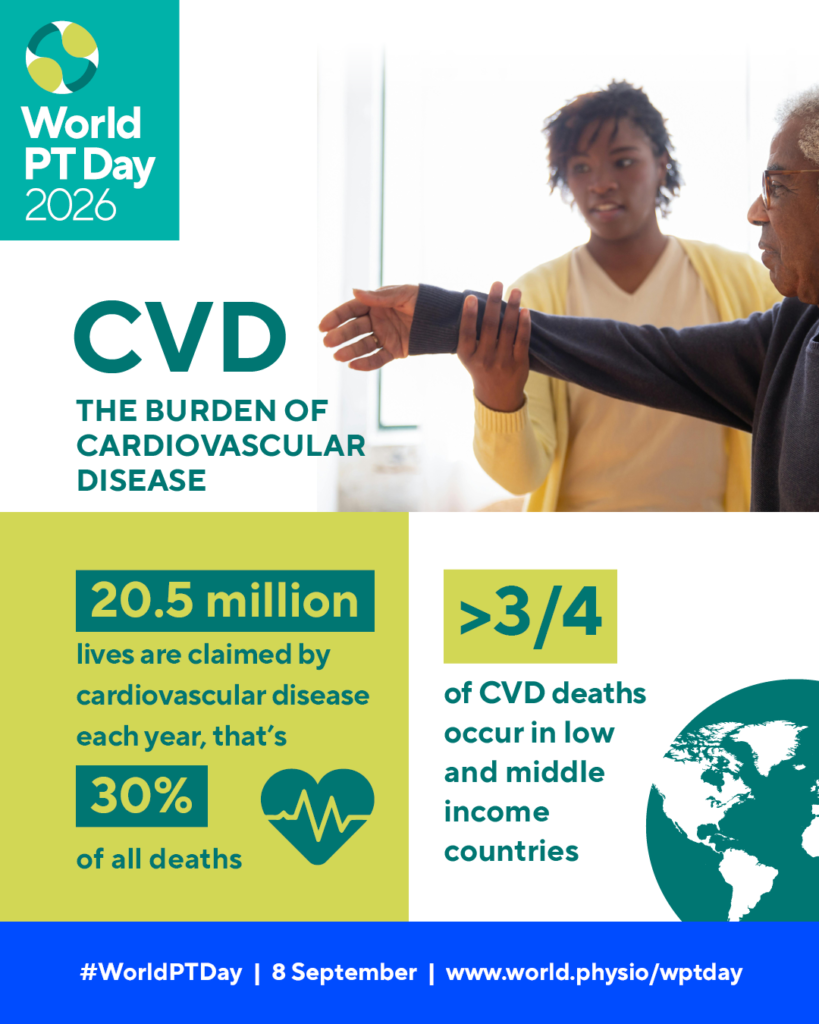
Cardiovascular disease (CVD) affects the heart and blood vessels and remains the leading cause of death globally.
According to World Physiotherapy, cardiovascular disease accounts for more than 20.5 million deaths each year, representing more than 30% of deaths worldwide. Heart attack and stroke account for approximately 85% of these CVD deaths.
While cardiovascular disease can have many contributing factors, physical inactivity is one modifiable risk factor that can be addressed.
This is where physiotherapy can make a real difference.
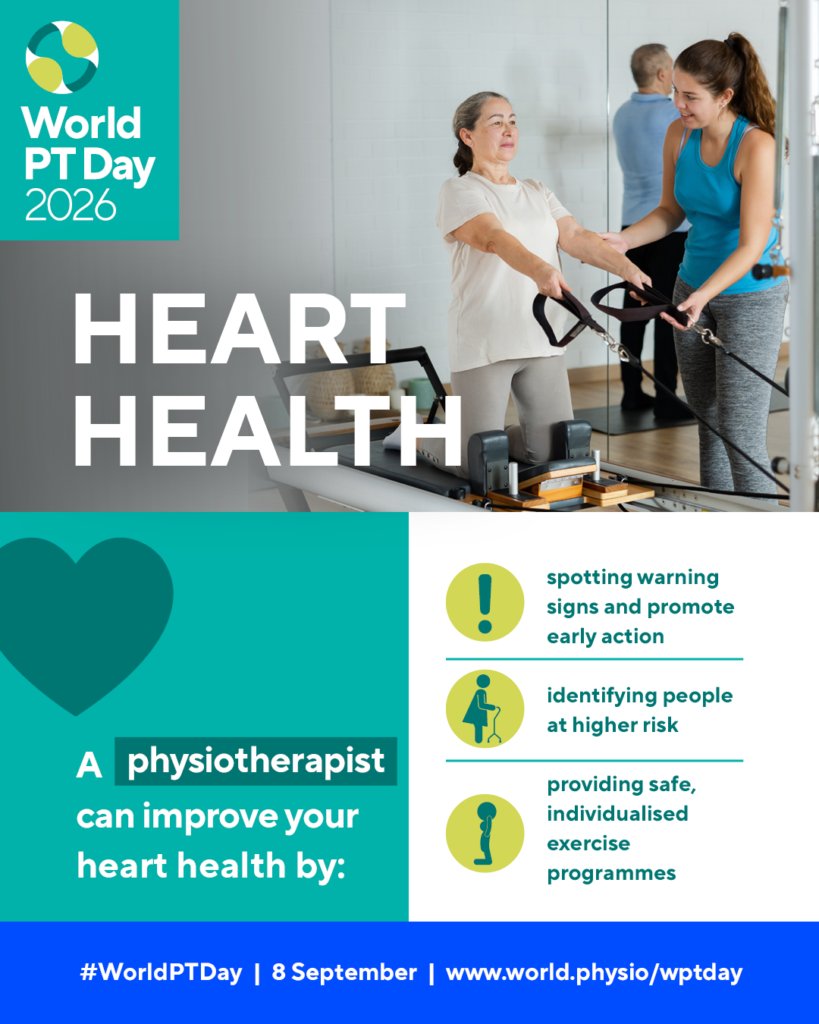
Physiotherapists can help people:
- Become more physically active safely
- Improve strength, mobility and fitness
- Develop personalised exercise programs
- Manage physical limitations that make exercise difficult
- Identify when someone may need further medical assessment
- Build confidence to return to regular physical activity
- Manage long-term conditions alongside other healthcare professionals
Importantly, exercise doesn’t need to mean running marathons or spending hours in the gym.
For someone who has been inactive, has chronic pain, has reduced mobility or is living with a long-term health condition, starting with the right amount of movement for their current abilities can be a significant step towards better health.
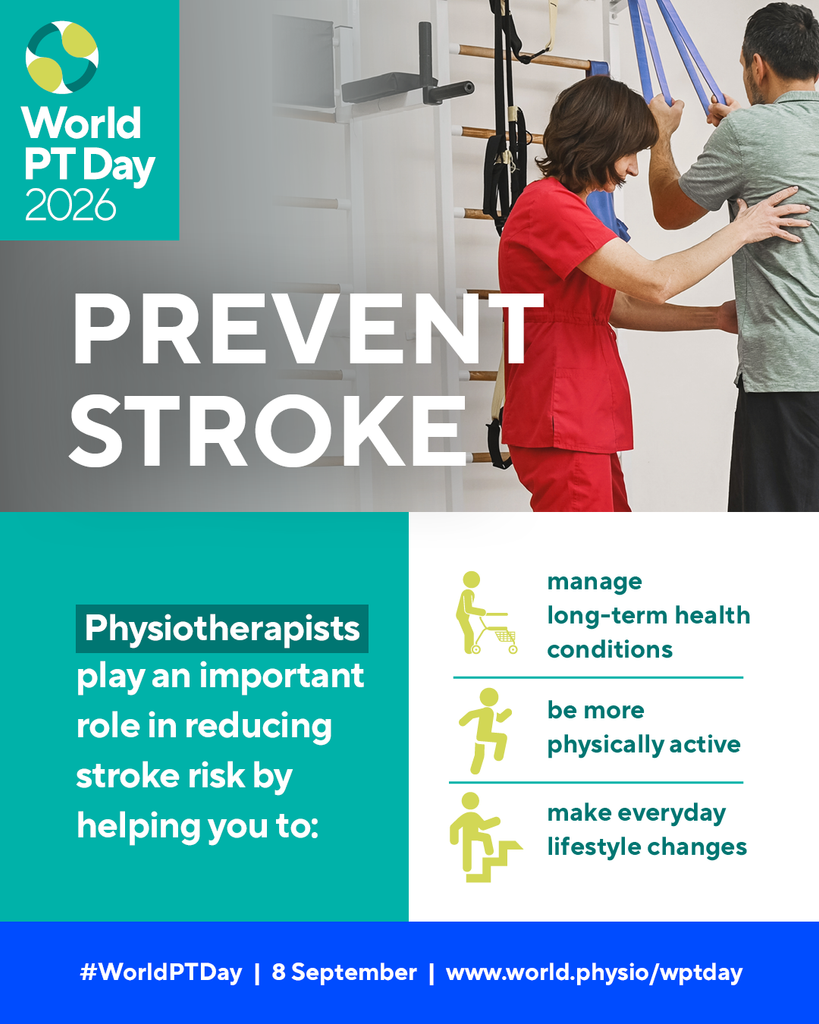
Physiotherapy and stroke prevention
Stroke is another major focus of World Physiotherapy Day 2026.
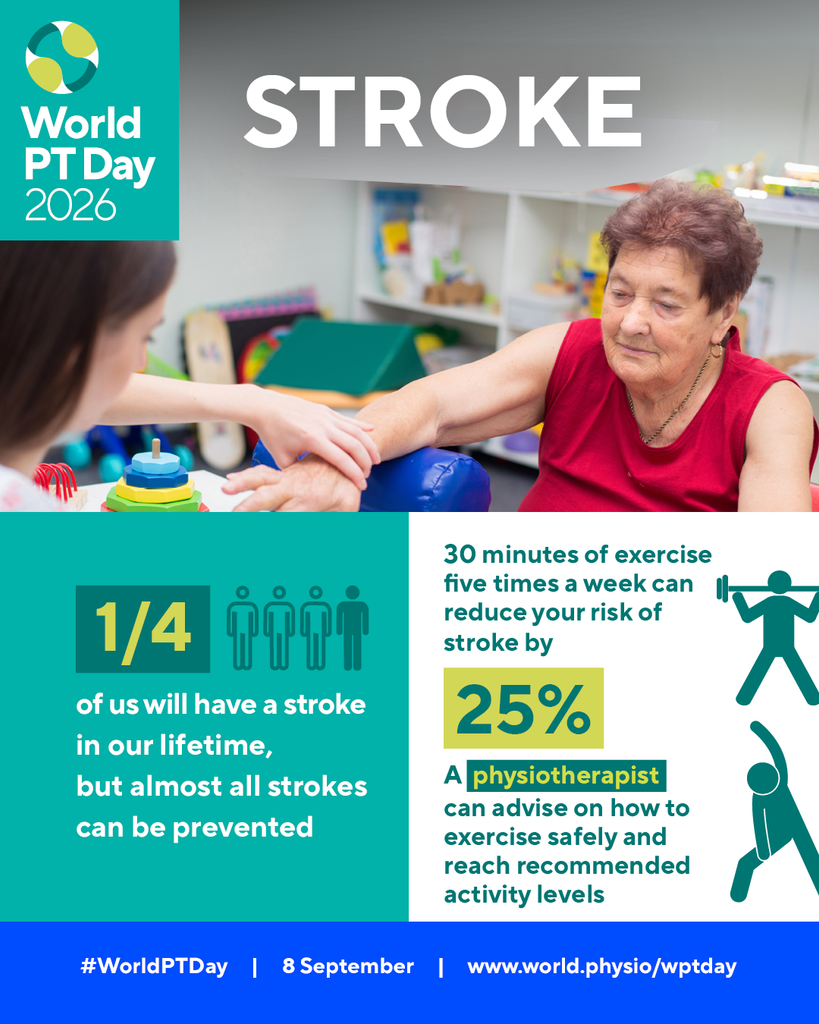
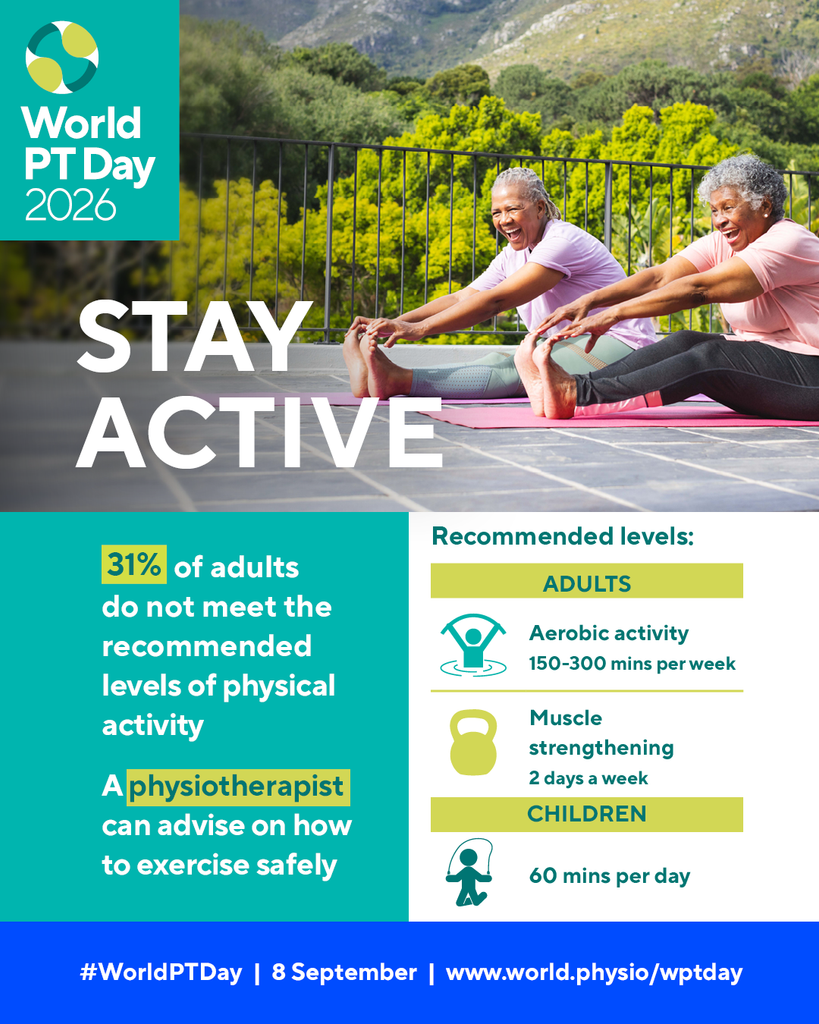
World Physiotherapy highlights that 1 in 4 people will experience a stroke during their lifetime, while also noting that almost all strokes can be prevented. Regular physical activity is an important part of reducing risk, with the campaign highlighting that 30 minutes of exercise five times a week can reduce stroke risk by 25%.
For people who find exercise difficult because of pain, weakness, balance problems or reduced mobility, a physiotherapist can help identify appropriate ways to move more.
This might include:
- Walking programs
- Strength exercises
- Balance training
- Mobility exercises
- Cardiovascular conditioning
- Functional exercises
- Strategies to gradually increase daily activity
The goal isn’t simply to prescribe exercises. It’s about finding safe, realistic and sustainable ways for each person to become more active.
Physiotherapy after a stroke
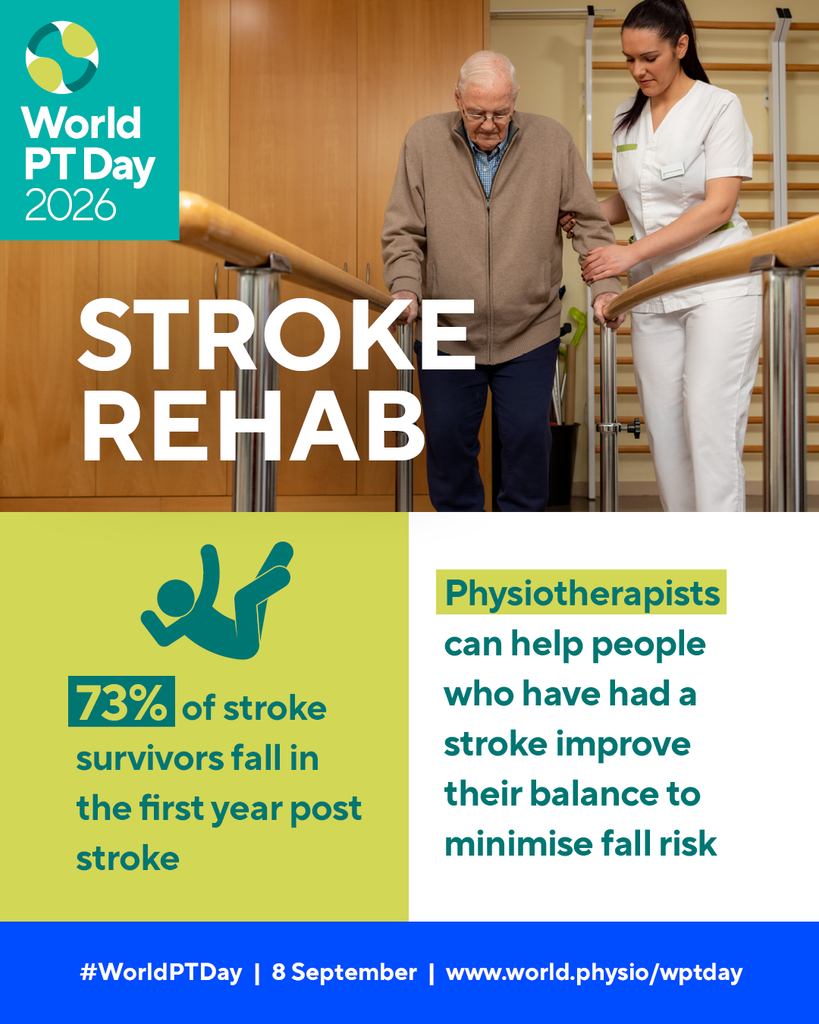
Physiotherapy also has an important role after a stroke.
Stroke rehabilitation can help people work towards regaining movement, strength, balance, coordination and independence. The specific approach depends on the individual and the effects of their stroke.
Exercise-based physiotherapy can support improvements in physical function, mobility, balance and quality of life throughout different stages of stroke recovery, from hospital rehabilitation through to longer-term community-based rehabilitation.
Recovery can look different for everyone. For some people, the focus may be returning to walking independently. For others, it could be improving balance, getting back to everyday activities or becoming more confident participating in the community.
You don’t have to wait until something goes wrong
One of the most important messages from World Physiotherapy Day 2026 is that physiotherapy isn’t only about treating an injury after it happens.
Physiotherapists can also help people prevent problems, improve physical activity levels and manage long-term health conditions.
If pain, stiffness, weakness or poor mobility is stopping you from exercising, simply being told to “exercise more” may not be particularly helpful.
A physiotherapist can assess what’s limiting your movement and develop an exercise approach that is appropriate for your current abilities.
Sometimes, the first step might be as simple as increasing how much you walk each day. For someone else, it could involve structured strengthening, cardiovascular exercise, balance work or a supervised rehabilitation program.
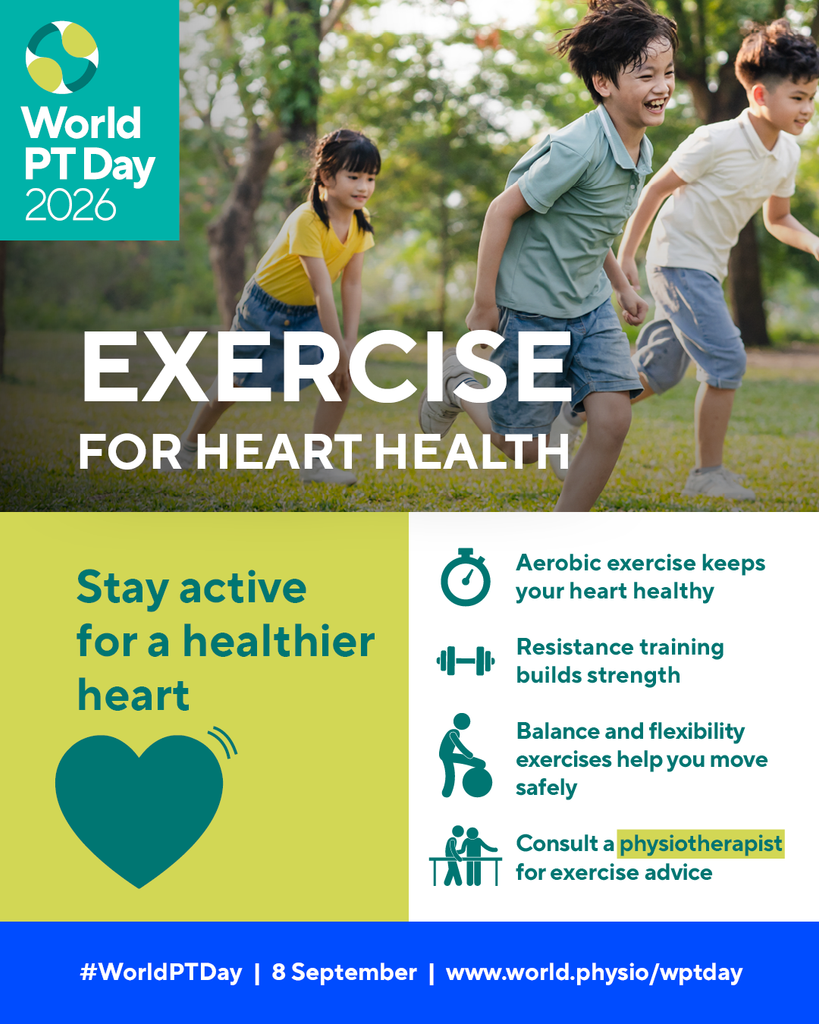
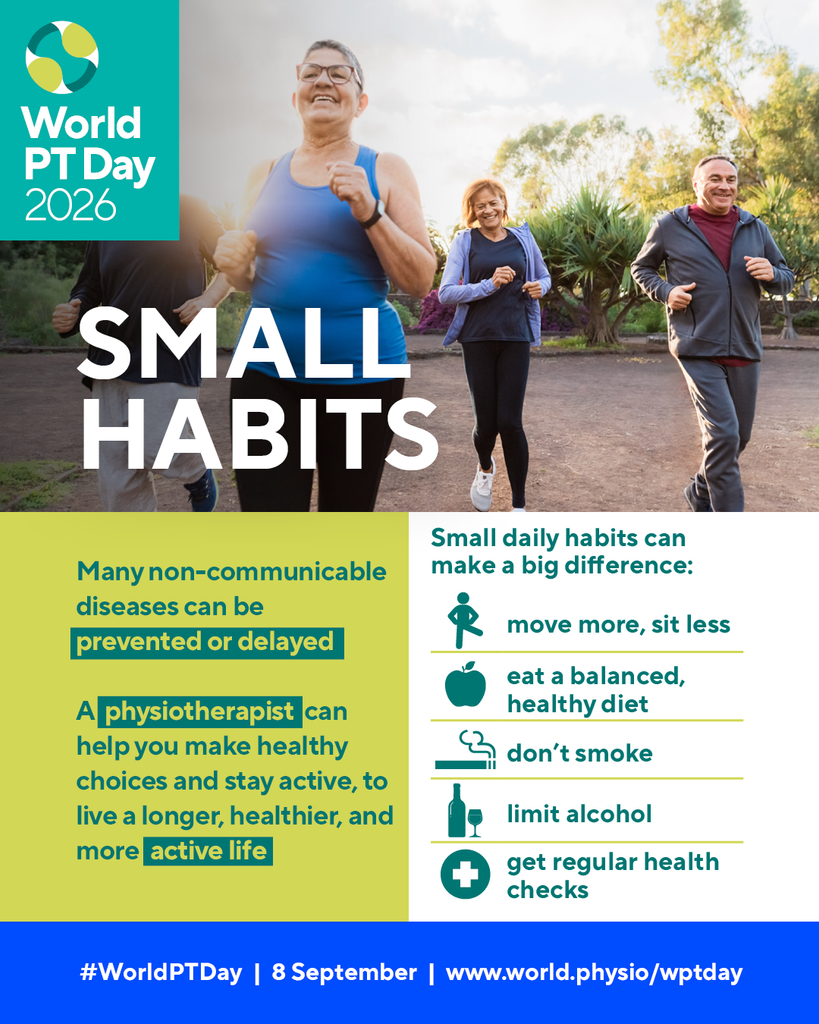
Move more, sit less
You don’t need to completely transform your lifestyle overnight.
Small, consistent changes can add up.
Consider where you could introduce more movement into your day:
- Take a short walk during your lunch break.
- Stand up and move regularly if you have a desk-based job.
- Walk around the house while talking on the phone.
- Take the stairs when appropriate.
- Join a supervised exercise or rehabilitation program.
- Find an activity you actually enjoy.
- If pain or another physical limitation is stopping you, seek professional advice.
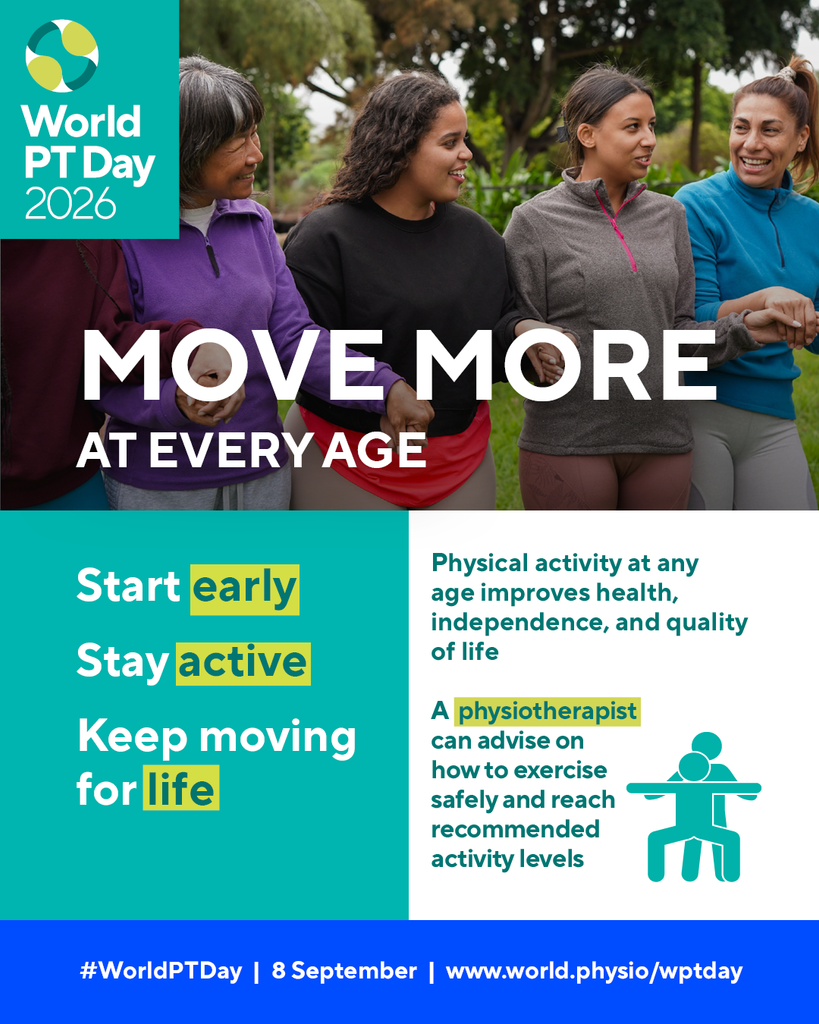
The World PT Day 2026 campaign also includes the message “Move more, at every age”, reinforcing that physical activity is relevant throughout life.
Looking for a way to move more? Our group classes could be a great place to start
Knowing that regular physical activity is important is one thing — actually getting started can be another.
If pain, stiffness, reduced strength, confidence or simply not knowing what exercises are right for you is holding you back, a physiotherapy-led group exercise class can be a great way to introduce more movement into your week.
At Logan Physio, our group exercise sessions provide a supportive environment where you can work on strength, mobility, balance, fitness and overall physical function with guidance from our physiotherapy team.
You don’t have to be an athlete, and you don’t need to be “fit” before you start. Our programs can be adapted to suit different abilities and physical needs, making them a practical option for people who want to become more active in a safe and supported environment.
Group exercise can also make it easier to stay consistent. Rather than trying to motivate yourself to exercise alone at home, you have a scheduled session, professional guidance and the encouragement of exercising alongside other people.
If World Physiotherapy Day 2026 has you thinking about how you could move more and look after your long-term health, why not consider whether one of our physiotherapy-led group exercise classes could be the right next step for you?
Celebrating World Physiotherapy Day 2026 at Logan Physio
At Logan Physio, we believe physiotherapy is about much more than treating an isolated injury.
Our focus is helping people move better, build confidence in their bodies and work towards the activities and lifestyle that matter to them.
Whether you’re dealing with persistent musculoskeletal pain, recovering from an injury, struggling to stay active or looking to improve your physical capacity, the right exercise and rehabilitation approach can help you take positive steps forward.
World Physiotherapy Day 2026 is a great reminder that movement is an important part of looking after our health – and it’s never too late to start.
If pain, weakness or reduced mobility is preventing you from being active, talk to our physiotherapy team at Logan Physio about how we can help you find a safe and achievable way forward.
