
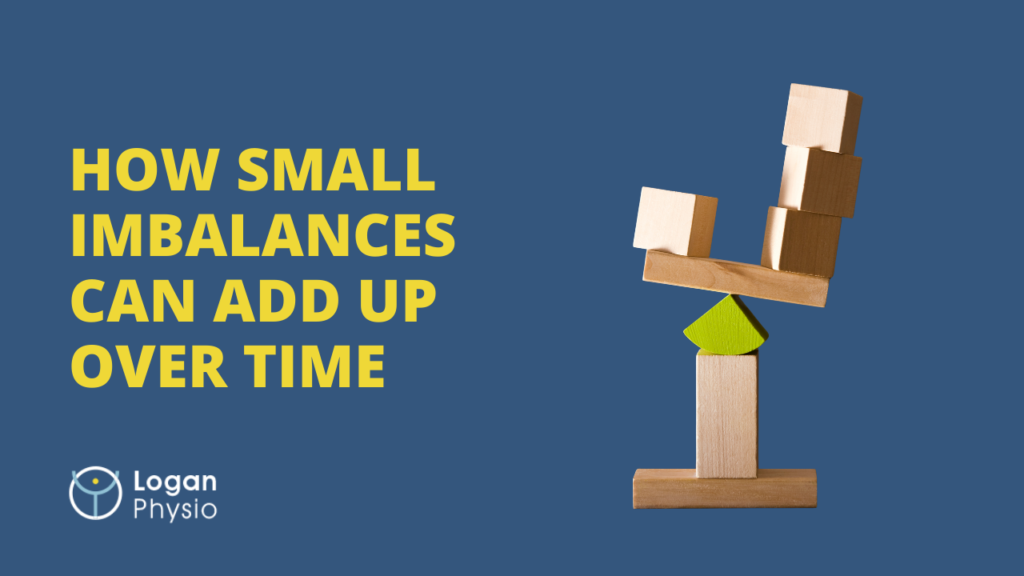
Most injuries, aches, and persistent pains don’t come out of nowhere.
They build.
Often quietly. Gradually. Almost invisibly.
A slightly stiffer hip. One shoulder that moves a bit less. A habit of shifting your weight to one side when you stand. A desk setup that encourages you to slump just a little.
On their own, these small imbalances don’t seem like a big deal. You can still move, work, train, and get through your day. But over time, these tiny asymmetries can stack up – placing extra load on certain joints, muscles, and tissues until your body starts to complain.
Let’s explore how small imbalances develop, why they matter, and how physiotherapy can help prevent minor issues from becoming major problems.
What Do We Mean by “Small Imbalances”?
In the body, balance doesn’t mean perfect symmetry.
Everyone has a dominant side. Everyone moves slightly differently from left to right. That’s normal.
A problem arises when those differences begin to affect how load is distributed through your body.
Small imbalances can include:
- Reduced mobility on one side compared to the other
- Muscle weakness or delayed activation in certain areas
- Habitual postures that favour one position
- Repetitive movements that overload the same tissues
- Poor movement control during everyday tasks
These imbalances often develop without pain – which is why they’re easy to ignore.
How Do Small Imbalances Develop in the First Place?
1. Modern Lifestyles Encourage Asymmetry
Many of us spend long hours sitting, driving, or looking at screens. We tend to:
- Sit with legs crossed the same way every time
- Lean onto one elbow or arm
- Shift weight onto one hip when standing
Over months and years, these habits subtly change how our muscles lengthen, shorten, and activate.
2. Repetition Without Variety
Work, sport, and daily routines often involve repeating the same movements again and again. Even simple tasks – lifting, reaching, walking – done with poor mechanics can reinforce imbalances over time.
3. Old Injuries (Even Long-Forgotten Ones)
An ankle sprain from years ago. A bout of back pain that “went away.” A shoulder issue you worked around.
Your body is excellent at compensating. But compensation isn’t the same as resolution. Without proper rehab, old injuries can quietly influence how you move long after the pain has settled.
Why Small Imbalances Become Big Problems
Your body is a master adapter. If one area isn’t doing its job properly, another area will step in.
At first, this is helpful.
Over time, it becomes costly.
Load Gets Redirected
When movement isn’t evenly shared, certain joints and muscles end up working harder than they should. This increases wear and tear – especially in areas like the lower back, hips, knees, neck, and shoulders.
Fatigue Sets In Faster
Muscles that are overworking fatigue sooner. When fatigue increases, movement quality drops further, reinforcing the imbalance.
Pain Is Often the Last Symptom
Pain doesn’t usually appear at the start of the problem. It shows up after weeks, months, or even years of accumulated stress.
By the time pain is present, the imbalance has often been there for a long time.
Everyday Examples of Imbalances Adding Up
You don’t need to be an athlete to experience this.
- A desk worker develops recurring neck tension due to subtle shoulder asymmetry
- A parent lifts a child mostly on one hip, leading to back or hip discomfort
- A runner with reduced ankle mobility starts noticing knee pain
- A tradie favours one side while carrying tools, slowly irritating their shoulder
In each case, the issue isn’t one big event – it’s the repetition of small, inefficient movements.
The Role of Movement Quality
Quantity of movement is important, but quality matters just as much.
If you move often but move poorly, you’re simply reinforcing imbalance faster.
Good movement:
- Distributes load efficiently
- Uses the right muscles at the right time
- Allows joints to move through appropriate ranges
Physiotherapy focuses not just on how much you move, but how you move.
Why These Issues Are Easy to Miss
Small imbalances often:
- Don’t cause immediate pain
- Feel “normal” because they develop slowly
- Are masked by strength or fitness
Many people only seek help once pain interferes with work, sleep, or activity. By then, the solution usually takes longer than if the issue had been addressed earlier.
How Physiotherapy Helps Correct Small Imbalances
Physiotherapy isn’t just about treating pain – it’s about identifying why pain might develop in the first place.
Assessment Beyond the Pain Spot
Rather than only looking at where symptoms are felt, physiotherapists assess:
- Movement patterns
- Joint mobility
- Muscle activation and control
- Load tolerance
This helps uncover imbalances that aren’t obvious day-to-day.
Targeted, Individualised Exercises
Generic exercises can help, but targeted exercises help faster. Physiotherapy programs are designed to:
- Restore mobility where it’s lacking
- Improve strength and control where it’s needed
- Reinforce efficient movement habits
Education for Long-Term Change
Understanding why an imbalance developed helps prevent it from returning. Small changes in posture, movement strategies, and daily habits can make a big difference over time.
Why Early Action Matters
Addressing small imbalances early can:
- Reduce the risk of injury
- Improve performance and efficiency
- Prevent persistent or recurring pain
- Save time and frustration in the long run
Think of it like car maintenance. Fixing a minor alignment issue early is far easier than replacing worn parts later.
You Don’t Need to Be in Pain to Benefit from Physio
One of the biggest misconceptions about physiotherapy is that it’s only for people who are already injured.
In reality, many people benefit from physiotherapy because they aren’t injured – yet.
A proactive approach can help keep your body moving well, especially if you:
- Sit or stand for long periods
- Perform repetitive tasks
- Train regularly
- Notice stiffness or asymmetry
- Want to stay active long-term
Small Changes, Big Impact
Your body responds to what you do most often.
Small imbalances don’t cause problems overnight – but they do add up.
The good news? Small, consistent corrections can be just as powerful in the opposite direction.
Ready to Address the Little Things Before They Become Big Ones?
If you’ve noticed recurring stiffness, niggles, or feel that your movement isn’t as balanced as it could be, a physiotherapy assessment can help identify and address these issues early.
👉 Book an appointment with our physiotherapy team to move better, feel stronger, and prevent small imbalances from turning into long-term problems.
