
You may have seen someone with large, round red or purple marks on their back or legs and wondered:
“What on earth happened?”
Those marks are often the result of cupping therapy.
Cupping has been used for hundreds of years, but it has also become increasingly popular in modern physiotherapy and sports rehabilitation. You may have even seen elite athletes using it as part of their recovery.
But does cupping actually work? And more importantly, could it help with your pain or injury?
Let’s take a closer look.
What is cupping therapy?
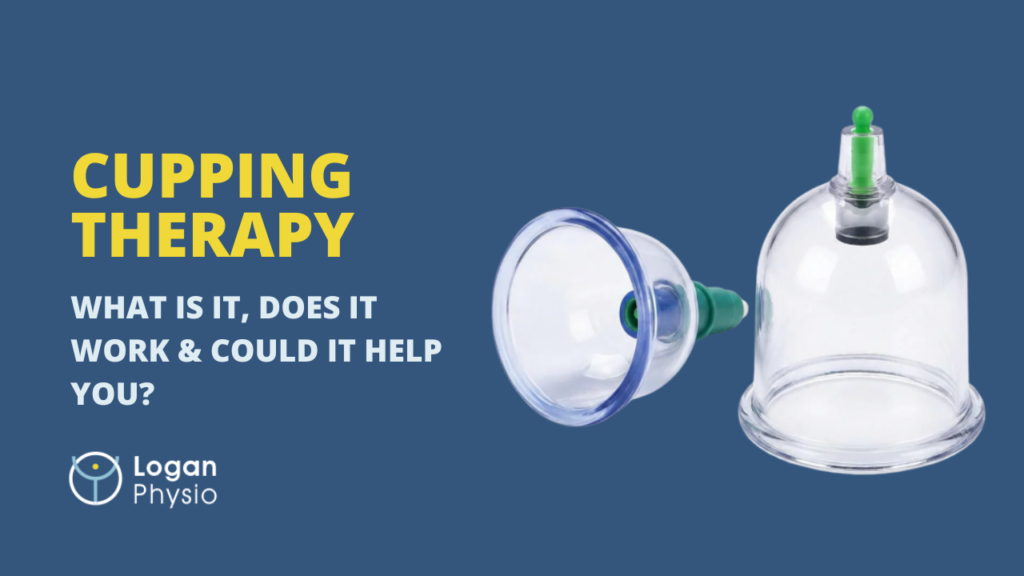
Cupping involves placing specially designed cups against the skin and creating a gentle vacuum inside the cup.
This suction lifts the skin and the tissues underneath it into the cup.
Physiotherapists who are trained in cupping may use cups over areas of muscle or soft tissue that may be contributing to someone’s symptoms. The cups may be left in place for a period of time or gently moved across the skin.
You may also hear this technique called myofascial decompression.
The aim isn’t simply to put a cup on the sore spot and hope for the best. Cupping is generally used as one part of a broader physiotherapy treatment plan.
Why do people use cupping?
Cupping may be used to help with things such as:
- Muscle tightness
- Musculoskeletal pain
- Reduced movement
- Localised muscle tension
- Some types of back and neck pain
- Recovery as part of a sports rehabilitation program
Researchers believe cupping may influence blood flow and stimulate the nervous system, which may help change how the body responds to pain.
However, we’re still learning exactly how and why cupping works.
That’s important because you may see some pretty big claims about cupping online.
Cupping isn’t a magic treatment that “pulls toxins out” or fixes every type of pain.
So… does cupping actually work?
Sometimes – but it depends on the problem.
Research into cupping is growing, and some studies have found positive results, particularly for certain types of musculoskeletal pain.
For example, research has found that cupping may help reduce pain in people with chronic neck pain and low back pain.
There is also some evidence that it may help improve movement in certain situations.
However, the research isn’t equally strong for every condition.
Some studies have found benefits for things such as plantar heel pain and knee osteoarthritis, while other research has produced mixed results.
This is why we don’t recommend thinking of cupping as a treatment that works for everyone.
Instead, it can be considered one tool that may be useful alongside other physiotherapy treatments.
Why does cupping leave those big round marks?
This is probably the first thing most people notice!
The circular red, purple or darker marks are caused by the suction from the cup.
The vacuum draws the skin and underlying tissues upwards, which can cause temporary changes in the small blood vessels in the area.
The marks can look dramatic, but they’re generally temporary and typically fade within 1 – 10 days.
Your physiotherapist should always explain this before treatment so you know what to expect.
So, if you’re planning to wear a backless dress the day after your treatment, you might want to take the marks into consideration!
Does cupping hurt?
Cupping can feel unusual, but it shouldn’t be excessively painful.
You may feel a pulling, tight or stretching sensation as the cup lifts the skin.
A trained physiotherapist can adjust the amount of suction depending on your comfort and the treatment being performed.
As with any hands-on treatment, communication is important. If something doesn’t feel right, let your physiotherapist know.
Is cupping suitable for everyone?
No.
While cupping is generally considered a low-risk treatment, there are situations where it isn’t appropriate.
For example, cups shouldn’t be placed over open wounds, ulcers, fractures, dislocated joints or areas of significant swelling.
There are also certain medical conditions where cupping may not be recommended.
That’s why a proper assessment is important before treatment.
A physiotherapist should consider your symptoms, medical history and individual circumstances before deciding whether cupping is appropriate for you.
What about cupping for sports injuries?
Cupping has become particularly popular among athletes.
You may have seen professional athletes covered in cupping marks after training or competition.
Some research suggests cupping may help with pain, muscle soreness or movement when used as part of rehabilitation.
However, the evidence isn’t strong enough to suggest that cupping alone will make you recover faster from every sports injury.
Think of it this way:
Cupping can be a tool in the toolbox – but it isn’t the whole toolbox.
For an injury, your rehabilitation may also involve exercises, strengthening, mobility work, education and gradually returning to the activities you enjoy.
What about fire cupping?
You may also have heard of fire cupping.
This traditional technique uses a flame to create the vacuum inside a glass cup before it is placed on the skin.
It’s different from the mechanical or manual pump techniques that may be used in modern physiotherapy.
Fire cupping also introduces additional safety considerations because you’re working with an open flame.
Importantly, much of the research discussed in the evidence around cupping relates to manual or mechanical cupping techniques, so we shouldn’t automatically assume that the same evidence applies specifically to fire cupping.
Cupping Therapy FAQs
If you’re considering cupping, you probably have a few practical questions. Here are some of the most common ones.
How long do cupping marks last?
Cupping marks are temporary. They can look red, purple or darker depending on the individual and the treatment, and typically fade within 1 – 10 days.
Does cupping hurt?
Cupping can create a pulling, tight or stretching sensation as the skin is lifted. It shouldn’t be excessively painful. The amount of suction can be adjusted to suit the individual.
Is cupping the same as massage?
No. Cupping uses negative pressure (suction) to lift the skin and underlying tissues, whereas massage involves applying pressure and movement to the body’s soft tissues. Cupping may sometimes be used alongside other hands-on techniques.
Can cupping help back pain?
There is some evidence that cupping may help reduce pain associated with low back pain, although the quality of the evidence varies. It should generally be considered as part of a broader treatment and rehabilitation approach rather than a standalone cure.
Can cupping help neck pain?
Research suggests cupping may help reduce pain and improve function for some people with chronic neck pain. However, results can vary between individuals and more research is still needed.
Can cupping help sports injuries?
Cupping is sometimes used as an adjunct to sports rehabilitation and may help with pain, muscle soreness or movement. However, there isn’t enough evidence to say that cupping alone will speed up recovery from every sports injury.
Will cupping get rid of toxins?
There are claims online that cupping “draws toxins out of the body”. These claims aren’t supported by the evidence discussed in our source material. The proposed effects of cupping relate more to things such as changes in local blood flow and stimulation of the nervous system.
Is cupping safe?
Cupping is generally considered a low-risk treatment, but it isn’t suitable for everyone. It shouldn’t be performed over areas such as open wounds, ulcers, fractures, dislocated joints or significant local swelling. A physiotherapist should assess whether it’s appropriate for you before treatment.
Can I have cupping if I don’t have pain?
Cupping is sometimes used in sports and recovery settings, but whether it’s appropriate depends on the individual and what you’re hoping to achieve. A physiotherapist can help determine whether it is likely to be beneficial for you.
Could cupping help your pain?
This is where things get interesting.
If you’ve been dealing with persistent back pain, neck pain, muscle tightness or another musculoskeletal problem, you may be wondering whether cupping could be worth trying.
The answer isn’t simply “yes” or “no”.
It depends on what is causing your symptoms.
A physiotherapy assessment can help determine what may be contributing to your problem and whether cupping is likely to be useful as part of your treatment.
And if cupping isn’t the right option for you, that’s okay too.
There are many different ways a physiotherapist can help you manage pain, improve movement and get back to the activities you enjoy.
Would you like to see cupping offered at Logan Physio?
Cupping isn’t currently a treatment we offer at Logan Physio, but we’re interested in hearing what our patients think.
If you’ve tried cupping before, are interested in trying it, or would simply like to see it become another treatment option at our clinic, let us know!
Send us a message or speak to our reception team and tell us you’d be interested in our physiotherapists offering cupping therapy.
Your feedback helps us understand what treatments and services our patients are interested in.
The bottom line on cupping therapy
Cupping isn’t a miracle cure, but there is evidence that it may help with pain and movement for certain musculoskeletal conditions, particularly some types of neck and low back pain. However, the quality of the evidence varies, and more research is still needed.
For this reason, cupping is best viewed as one potential tool within physiotherapy, rather than a replacement for exercise, rehabilitation and other appropriate treatments.
At Logan Physio, our focus is always on understanding your individual problem and finding the most appropriate way to help you move better, manage your pain and get back to the things you enjoy.
If you’re experiencing ongoing pain or stiffness and aren’t sure what treatment you need, a physiotherapy assessment is a good place to start.
You don’t necessarily need to know whether you need cupping, massage, exercise or another treatment before you make an appointment.
That’s what we’re here to help you work out.
