
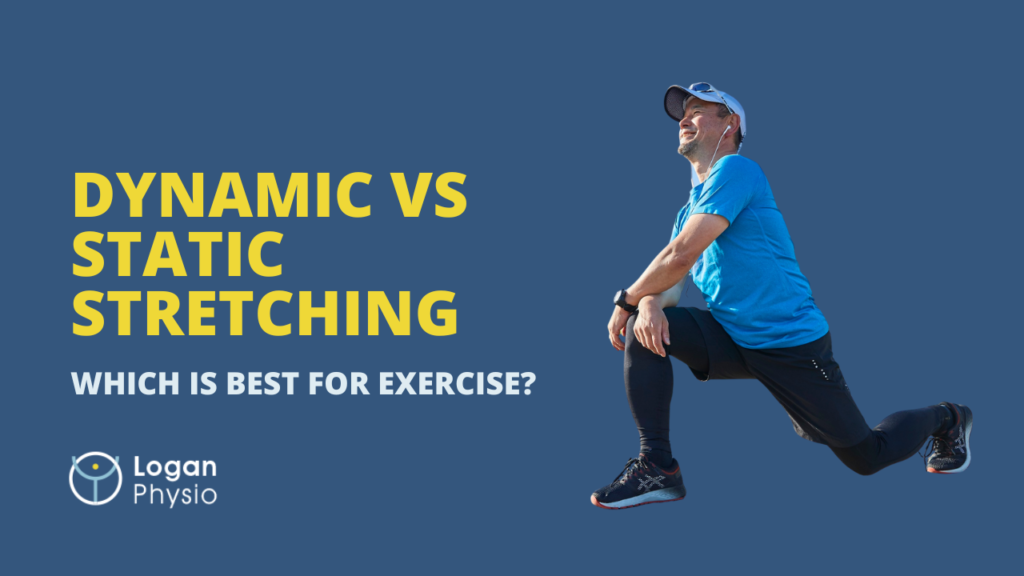
Stretching is a common part of exercise, rehabilitation and fitness routines, but there’s still a lot of confusion about when you should stretch, which type of stretching is best, and whether stretching actually prevents injuries.
Should you stretch before a workout? Is holding a stretch better than moving through it? And what’s the difference between dynamic stretching and static stretching?
The answer depends on what you’re trying to achieve.
As physiotherapists, we don’t recommend one type of stretching for everyone. The right approach depends on your goals – whether you want to improve flexibility, increase mobility, prepare for exercise, enhance performance or support injury rehabilitation.
What Is Dynamic Stretching?
Dynamic stretching involves moving your muscles and joints through their available range of motion in a slow, controlled way. Unlike static stretching, you don’t hold one position for an extended period.
Examples of dynamic stretches include:
- Leg swings
- Walking lunges
- Arm circles
- Hip rotations
- Controlled bodyweight squats
The aim of dynamic stretching is to prepare your body for movement and physical activity.
Dynamic movements can increase blood flow, warm up the muscles and help your nervous system prepare for the movements you’re about to perform.
Why Is Dynamic Stretching Good Before Exercise?
Dynamic stretching is particularly useful as part of a pre-exercise warm-up.
Research suggests that dynamic stretching can help improve movement, coordination and physical performance, making it a useful option before activities such as:
- Running
- Playing sport
- Going to the gym
- Group exercise
- Strength training
For example, if you’re about to go for a run, performing some controlled leg swings, walking lunges and other running-specific movements can help prepare your body for the activity ahead.
What Is Static Stretching?
Static stretching involves moving into a stretch and holding that position without movement, usually for around 15–60 seconds.
It’s the type of stretching most people traditionally think of when they hear the word “stretching”.
Common examples include:
- Hamstring stretches
- Calf stretches
- Hip flexor stretches
- Quadriceps stretches
- Chest and shoulder stretches
Static stretching is generally more useful when your goal is to improve flexibility and range of motion over time.
If you regularly feel stiff or have restricted movement around a joint, incorporating static stretching into an appropriate exercise or rehabilitation program may help improve your flexibility.
When Should You Do Static Stretching?
For most people, prolonged static stretching is better suited to after exercise, dedicated flexibility sessions or rehabilitation programs rather than immediately before activities that require maximal strength, power or speed.
That doesn’t mean you should never perform static stretches before exercise. There are situations where they may be appropriate, particularly when limited flexibility is affecting your ability to perform a specific movement.
The key is matching the type of stretching to your individual needs.
Dynamic vs Static Stretching: Which Is Better?
Neither type of stretching is inherently “better”.
They simply have different purposes.
| Your Goal | Stretching Approach |
|---|---|
| Prepare for exercise | Dynamic stretching |
| Warm up before sport | Dynamic stretching + sport-specific movements |
| Improve flexibility | Static stretching |
| Improve range of motion | Static stretching and appropriate mobility exercises |
| Prepare for a specific movement | Dynamic, movement-specific stretching |
| Rehabilitation | Depends on the injury and individual assessment |
A Simple Rule to Remember
Before exercise → Think movement.
Dynamic stretching can help prepare your body for the movements you’re about to perform.
Improving flexibility → Think consistency.
Regular static stretching may help gradually improve your range of motion.
In many cases, the best approach is to use both dynamic and static stretching at different times, depending on your goals.
Does Stretching Prevent Injuries?
This is one of the biggest misconceptions about stretching.
Many people assume that stretching before exercise will automatically reduce their risk of injury. However, stretching alone isn’t a reliable injury-prevention strategy.
Reducing your risk of injury involves a much broader approach, including:
- Regular strength training
- Gradually increasing your training load
- Appropriate recovery
- Good movement preparation
- Sport-specific conditioning
- Managing your overall training volume
Stretching can still be valuable, particularly when limited flexibility or mobility is affecting how you move. However, it works best as one part of a well-rounded exercise and injury-management program.
Should You Stretch Before or After Exercise?
The answer depends on the type of stretching and what you’re trying to achieve.
Before exercise:
Dynamic stretching and activity-specific movements are generally the better choice for preparing your body for exercise.
After exercise:
Static stretching can be incorporated into your cool-down if improving flexibility is one of your goals.
Outside of exercise:
Dedicated mobility and flexibility sessions can be useful if you have specific restrictions in your movement.
Ultimately, there isn’t a single stretching routine that works for everyone.
Key Takeaways
- Dynamic stretching uses controlled movement through your range of motion and is generally useful before exercise.
- Static stretching involves holding a stretch and is commonly used to improve flexibility over time.
- Dynamic stretching can help prepare your body for movement, coordination and exercise performance.
- Static stretching can be useful for improving flexibility and range of motion.
- Neither type of stretching is universally “better” – they have different purposes.
- Stretching alone does not prevent injuries. Strength training, appropriate load progression and a well-structured exercise program are more important for reducing injury risk.
- The best stretching approach depends on your individual goals, activity and physical needs.
Frequently Asked Questions About Stretching
1. Should I stretch every day?
Daily stretching can help improve flexibility, but it isn’t essential for everyone. Consistency is generally more important than frequency. The amount of stretching you need depends on your goals, activity levels and individual mobility.
2. How long should I hold a static stretch?
For general flexibility work, many guidelines suggest holding a static stretch for approximately 30 – 60 seconds, provided the stretch is comfortable and appropriate for you.
3. Can stretching reduce muscle soreness?
Stretching may help you feel less stiff, but it doesn’t significantly reduce delayed-onset muscle soreness (DOMS). Light movement, appropriate recovery and gradually returning to your normal training load are generally more useful strategies.
4. Is dynamic stretching enough for a warm-up?
Dynamic stretching can form an effective part of a warm-up, but your warm-up should ideally also include movements that are specific to the activity you’re about to perform.
For example, a runner may combine dynamic stretches with easy jogging and running drills, while someone preparing for strength training may perform lighter versions of the exercises they’re about to complete.
Need Help With Flexibility, Mobility or Exercise?
If stiffness, restricted movement or an injury is affecting your ability to exercise, work or participate in the activities you enjoy, a physiotherapist can assess why your movement is restricted and what exercises or treatment are appropriate for you.
At Logan Physio, we can help develop an individualised exercise and rehabilitation program based on your goals, your activity and your physical needs.
