
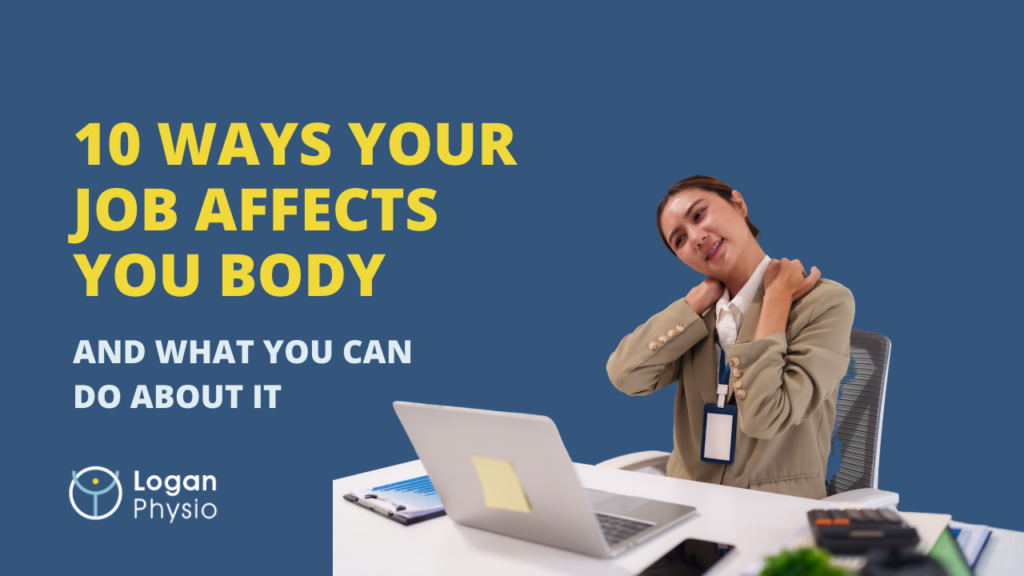
Your job is more than just a pay check – it can have a lasting impact on your health and wellbeing. Whether you’re sitting at a desk, standing on your feet all day, or constantly lifting and moving, the demands of work affect your body in ways you might not even notice. Understanding these impacts is the first step toward preventing discomfort, pain, and long-term injury.
Here are 10 ways your job affects your body – and practical strategies to counteract them.
1. Prolonged Sitting and Poor Posture
If your workday involves hours of sitting at a desk, your posture may be quietly taking a toll. Slouching or leaning forward to look at your screen can strain your neck, shoulders, and lower back. Over time, this can contribute to chronic pain and spinal issues.
Solution:
- Adjust your chair and monitor height for neutral spine alignment.
- Take micro-breaks every 30-60 minutes to stand, stretch, or walk.
- Consider a sit-stand desk if possible.
2. Repetitive Movements
Jobs that involve repetitive actions – typing, scanning items, or using machinery – can lead to overuse injuries like tendonitis or carpal tunnel syndrome. Even small, repetitive movements repeated hundreds of times per day can accumulate into significant strain.
Solution:
- Rotate tasks if possible to use different muscles.
- Stretch hands, wrists, and forearms regularly.
- Ensure ergonomic positioning of tools and equipment.
3. Stress and Tension
Work-related stress isn’t just mental – it manifests physically. Tension in the neck, shoulders, and jaw is common, and chronic stress can even increase the risk of headaches, digestive issues, and heart problems.
Solution:
- Incorporate deep breathing or mindfulness breaks into your day.
- Practice stress-relieving exercises, such as yoga or gentle stretching.
- Prioritise adequate rest outside of work hours.
4. Standing for Long Periods
Retail workers, chefs, healthcare staff, and factory employees often spend hours on their feet, which can cause foot, ankle, knee, and lower back discomfort. Standing in one position can reduce circulation and increase fatigue.
Solution:
- Wear supportive footwear with proper cushioning.
- Shift weight between legs and use anti-fatigue mats if available.
- Schedule short seated breaks to relieve pressure on joints.
5. Heavy Lifting and Manual Handling
Jobs that require lifting, carrying, or pushing heavy loads can put enormous strain on the back, shoulders, and knees. Improper lifting techniques can lead to acute injuries or chronic pain over time.
Solution:
- Use correct lifting mechanics: bend the knees, keep the load close to the body, and avoid twisting.
- Use mechanical aids or team lifts for heavy items.
- Incorporate strength training to support core and back muscles.
6. Eye Strain and Vision Problems
Working on computers, screens, or detailed tasks can cause digital eye strain, blurred vision, or headaches. Poor lighting or screen glare only exacerbates the problem.
Solution:
- Follow the 20-20-20 rule: every 20 minutes, look at something 20 feet away for 20 seconds.
- Adjust screen brightness and position to reduce glare.
- Schedule regular eye exams to detect early vision problems.
7. Reduced Physical Activity
Sedentary jobs limit natural movement throughout the day, which can affect cardiovascular health, weight management, and muscle tone. Over time, this can increase the risk of obesity, diabetes, and other health conditions.
Solution:
- Take walking breaks during the day.
- Use stairs instead of lifts when possible.
- Consider desk exercises or short workouts to stay active.
8. Workplace Noise and Hearing Impact
Jobs in construction, manufacturing, or hospitality may expose you to high levels of noise. Continuous exposure can lead to hearing loss, tinnitus, or increased stress levels.
Solution:
- Wear appropriate hearing protection.
- Limit exposure time where possible.
- Schedule regular hearing assessments if you work in noisy environments.
9. Poor Ergonomics and Workspace Design
A poorly designed workstation or awkward work environment can affect almost every part of your body. From a badly positioned keyboard to an uncomfortable chair, ergonomics play a huge role in preventing pain and injury.
Solution:
- Adjust desk, chair, and monitor to maintain natural posture.
- Keep frequently used items within easy reach.
- Seek professional ergonomic assessment if discomfort persists.
10. Fatigue and Sleep Disruption
Jobs with irregular hours, shift work, or long commutes can disrupt sleep patterns and lead to fatigue. Chronic fatigue reduces alertness, increases injury risk, and impacts overall physical and mental health.
Solution:
- Prioritise consistent sleep routines whenever possible.
- Limit caffeine and screen time before bed.
- Practice relaxation techniques to improve sleep quality.
Taking Action: Protect Your Body at Work
Awareness is the first step to protecting your body from the hidden toll of your job. Small, consistent changes – like adjusting posture, moving regularly, or using proper lifting techniques – can prevent discomfort and long-term injury.
At Logan Physio, we specialise in helping busy professionals manage and prevent work-related musculoskeletal issues. Our physiotherapists provide personalised advice, exercises, and treatment strategies to keep you moving comfortably, no matter your work environment.
📅 Book an appointment today and take the first step toward a healthier, pain-free workday.
