
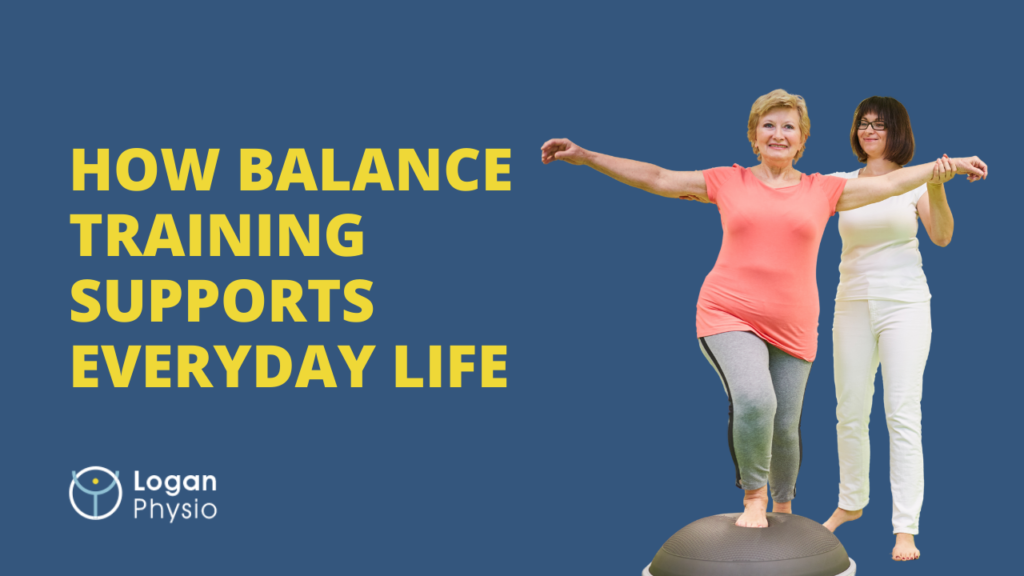
When people think about balance training, they often picture standing on one leg or wobbling on a foam pad at the gym. It’s easy to assume balance exercises are only for athletes or older adults worried about falls. In reality, balance is something we rely on constantly – often without even realising it.
From walking on uneven ground to carrying groceries, reaching into cupboards, getting dressed, or recovering from a slip, balance underpins almost every movement we make. When balance is compromised, everyday tasks become harder, confidence drops, and the risk of injury increases.
The good news? Balance can be trained, improved, and maintained at any age. In this blog, we’ll explore how balance training supports everyday life, why it’s often overlooked, and how physiotherapist-led group classes can help you move with greater confidence and control.
What Is Balance, Really?
Balance isn’t just about “not falling over”. It’s a complex interaction between several systems in the body working together, including:
- The muscles and joints, which provide strength and stability
- The nervous system, which processes information and coordinates movement
- Vision, which helps orient us in space
- The vestibular system (inner ear), which detects head movement and position
Your brain is constantly integrating information from all of these systems to keep you upright and moving smoothly. When one or more systems aren’t working optimally – due to injury, pain, fatigue, ageing, or inactivity – balance can suffer.
How Balance Training Supports Everyday Activities
1. Reduces the Risk of Falls and Injuries
Falls aren’t just a concern for older adults. Slips, trips, and missteps happen to people of all ages, particularly when balance reactions are slow or inefficient.
Balance training improves:
- Reaction time
- Postural control
- The ability to recover quickly if you lose your footing
By improving how your body responds to unexpected challenges, balance training helps reduce the likelihood of falls and related injuries in everyday situations.
2. Improves Confidence in Movement
When balance feels unreliable, people often become cautious with movement. This can lead to:
- Avoiding activities
- Moving more stiffly
- Reduced physical activity overall
Ironically, this avoidance can worsen balance over time. Structured balance training helps rebuild trust in your body, allowing you to move more freely and confidently in daily life – whether that’s walking outdoors, navigating stairs, or playing with children or grandchildren.
3. Enhances Strength and Coordination
Balance exercises aren’t just about standing still. Effective balance training challenges:
- Core stability
- Hip and ankle strength
- Coordination between limbs
This type of training supports smoother, more efficient movement patterns that carry over into everyday tasks such as bending, lifting, reaching, and changing direction.
4. Supports Joint Health and Pain Management
Poor balance often leads to compensatory movement patterns – placing extra strain on certain joints or muscles. Over time, this can contribute to aches, pains, or flare-ups of existing issues.
Balance training encourages:
- Better joint awareness (proprioception)
- More even load distribution
- Improved movement quality
This can be particularly helpful for people managing knee, hip, ankle, or back discomfort.
5. Helps You Stay Active as You Age
Balance naturally changes with age, but decline is not inevitable. Regular balance training helps maintain:
- Independence
- Mobility
- Participation in activities you enjoy
Staying active isn’t just about fitness – it’s about being able to live life on your terms. Balance training plays a key role in supporting that goal.
Why Balance Training Is Often Overlooked
Many people focus on strength or cardio while unintentionally neglecting balance. Others assume balance exercises are boring, too hard, or only needed after an injury.
In reality, balance training:
- Can be scaled for all abilities
- Is most effective when combined with strength and movement training
- Works best when guided by a physiotherapist who understands how the body moves
When done well, balance training is engaging, challenging, and highly practical.
The Role of Physiotherapy in Balance Training
Physiotherapists don’t just prescribe random balance exercises. Balance training in a physio-led setting is:
- Individualised to your needs and goals
- Progressive, so it continues to challenge you safely
- Functional, meaning it relates directly to everyday life
Whether you’re recovering from an injury, managing pain, or simply wanting to move better, physiotherapy-guided balance training ensures you’re working on the right things, in the right way.
Why Group Classes Are a Great Way to Train Balance
If you struggle with motivation or feel unsure about exercising on your own, group classes can be a fantastic option.
Benefits of Physiotherapist-Led Group Classes
- Structured and supervised sessions
- Exercises tailored to improve balance, strength, and control
- A supportive, encouraging environment
- Motivation and accountability
- Safe progression without guesswork
Group classes are ideal if you:
- Want to improve balance but don’t know where to start
- Prefer exercising with guidance and reassurance
- Enjoy the social aspect of moving with others
- Want consistency without the pressure of training alone
Balance Training Isn’t Just for “Later in Life”
One of the biggest misconceptions is that balance training is only relevant once problems arise. In truth, balance training is most powerful when used proactively.
Improving balance now can help:
- Prevent injuries
- Support long-term mobility
- Enhance performance in daily tasks
- Build confidence in movement
It’s not about waiting until balance becomes an issue – it’s about supporting your body before it does.
Take the Next Step Towards Better Balance
Balance is a foundational part of how we move, feel, and function every day. When balance is strong, life feels easier. When it’s compromised, even simple tasks can become challenging.
If you’d like to improve your balance, confidence, and movement quality, our physiotherapist-led group classes provide a safe, supportive way to get started. Whether you’re returning to exercise, managing ongoing aches, or simply wanting to move better in daily life, we’re here to help.
👉 Book an appointment or ask about joining our group classes today and take a positive step towards better balance and everyday confidence.
